Johor-Singapore RTS and North Singapore Property: Will it affect prices, demand, and rent?

If you have been following the property market in Singapore, you have probably heard more people talking about the Johor-Singapore RTS recently.
And every time a major transport project gets closer to opening, the same question comes up:
Will this push up property prices in the north of Singapore? Will it affect rental demand? Should buyers and investors care?
My view is this: yes, it matters, but probably not in the way many people think.
I do not think the Johor-Singapore RTS is some magic button that suddenly lifts all northern Singapore property prices. But I also do not think it is just a nice headline with no real impact. The truth, as usual, sits somewhere in the middle.
For the right location and for the right type of buyer or tenant, the Johor-Singapore RTS can become meaningful. But it still has to sit on top of the usual property fundamentals. If the property does not make sense on its own, the RTS is not going to save it.
What is the Johor-Singapore RTS?
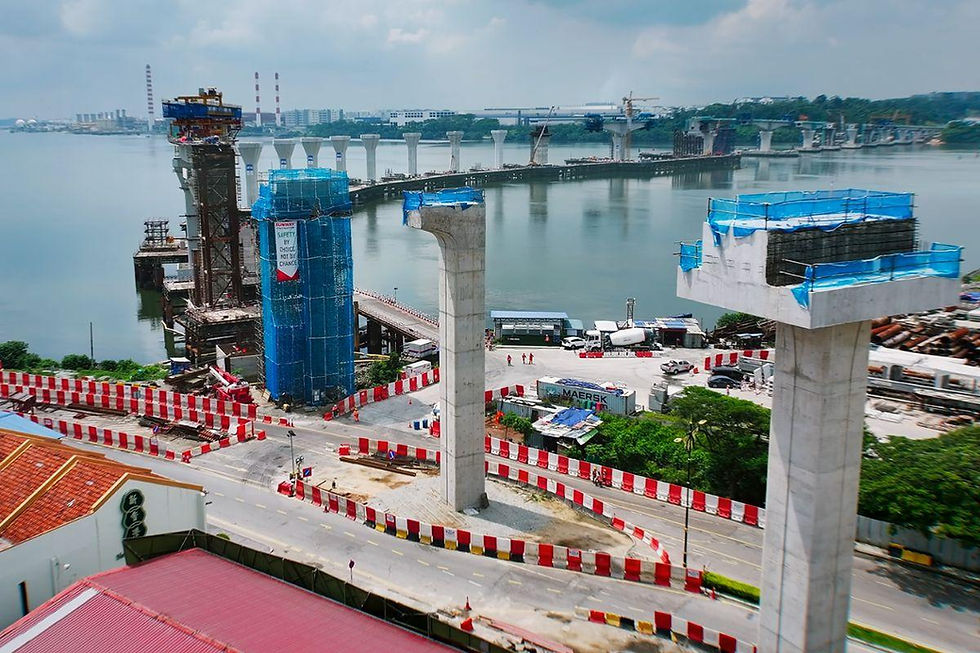
The Johor-Singapore RTS, or Rapid Transit System Link, is a cross-border rail shuttle that connects Woodlands North in Singapore to Bukit Chagar in Johor Bahru.
The ride itself is short. The bigger point is that it is meant to make travel between Singapore and Johor smoother and more predictable than relying on road traffic across the Causeway.
What makes this project more interesting is not just the short train ride. It is the fact that both stations will have co-located customs, immigration and quarantine facilities. In simple terms, you clear immigration before boarding, which is supposed to reduce friction in the crossing process. Woodlands North will also connect directly to the Thomson-East Coast Line, so the Johor-Singapore RTS is not just some isolated shuttle service. It plugs into Singapore’s wider MRT network.

That is why the Johor-Singapore RTS matters. It is not just about a train. It is really about mobility, convenience, and the potential reshaping of how certain people move across the border.
What is the JS-SEZ, and how does it connect to the Johor-Singapore RTS?
The bigger story behind the Johor-Singapore RTS is the Johor-Singapore Special Economic Zone, or JS-SEZ.
This is where I think many people oversimplify the conversation.
The Johor-Singapore RTS is not the JS-SEZ. The RTS is one transport link. The JS-SEZ is the much bigger economic story. It is a broader initiative meant to strengthen the connection between Singapore and Johor by making it easier for businesses to tap the strengths of both sides.
Put simply, Singapore offers strengths in areas like headquarters functions, finance, advanced services, and R&D. Johor offers strengths in land, scale, industrial capacity, and cost structure. The JS-SEZ is meant to help businesses combine both more effectively.
So where does the Johor-Singapore RTS come in?
It is one of the key physical links that helps make this bigger strategy more workable in real life.
And that is why this matters for property in northern Singapore.
If you only look at the Johor-Singapore RTS as a train, you may think, “Okay, nice to have.”
But if you look at it together with the Woodlands North and Woodlands Gateway story, then it becomes part of a wider northern transformation narrative. That does not automatically mean a price boom. But it does mean we should not dismiss it too quickly either.
Subscribe to our newsletter if you enjoy insights like this.
So, how could the Johor-Singapore RTS affect the north Singapore property market?
This is where I think people can go wrong in two directions.
One camp becomes too bullish and assumes the Johor-Singapore RTS will automatically push up all property prices in the north.
The other camp becomes too dismissive and says it changes nothing because people are not going to cross into JB every day for lunch, groceries, and errands.
Personally, I think both views miss the point.
The Johor-Singapore RTS is unlikely to be a blanket game changer for all of north Singapore. But for the right micro-market, especially around Woodlands North, it can still become a real differentiator.

How the Johor-Singapore RTS may affect the buy-sell demand of property
For the buy-sell market, I do not think the Johor-Singapore RTS suddenly overrides the usual fundamentals.
At the end of the day, buyers in Singapore still care about the basics:
Is the property near the MRT?
Is it near food and groceries?
Is it near good schools?
Is there healthcare nearby?
Is the entry price sensible?
Will there be a strong exit pool later?
Those things still matter far more than a cross-border train link.
So if a property is weak on the fundamentals, I would not suddenly get excited just because the Johor-Singapore RTS is nearby.
But I also think it is too simplistic to say there is no impact at all.
Where I think the Johor-Singapore RTS could matter more is with specific buyer groups.
The first group is retirees, near-retirees, and right-sizers.
This group has one big advantage: time.
They may not need to think in terms of peak-hour commuting. They may be more open to using the Johor-Singapore RTS for occasional trips into JB for dining, shopping, services, leisure, or just stretching their dollar a little further while still living in Singapore.
For them, the RTS may not be a daily necessity. But it can be a genuine lifestyle enhancer.
The second group is cross-border households.
Some buyers have family, caregiving responsibilities, or social ties in Johor. For them, smoother access across the border can make northern Singapore more attractive in a way that is actually meaningful, not just theoretical.
The third group is people linked to the broader Singapore-Johor business corridor.
If Woodlands North and Woodlands Gateway become more strategically important as part of the JS-SEZ story, then some business owners, operators, and professionals may start placing more value on being closer to this node.
Now, does that mean every project in the north benefits equally? Definitely not.
But it does mean some properties may gain a little more relevance over time because of where they sit within this evolving cross-border corridor.
That said, there is an important counterbalance here: future supply.
Whenever an area transforms, it usually does not just get better infrastructure. It also gets more development, more competition, and more supply. So even if the Johor-Singapore RTS supports demand, that does not mean prices will automatically rerate without friction.
That is why I would be careful with any lazy narrative that says, “RTS means north Singapore prices will surge.”
That is too simplistic.
My view on buy-sell is this:
The Johor-Singapore RTS is not a broad-based catalyst for all north Singapore home prices, but it can improve the appeal of selected northern micro-markets, especially around Woodlands North, for specific buyer profiles.
👉 Download our free playbooks:


How the Johor-Singapore RTS may affect rent
Now this is where I think the impact could be more noticeable.
For the rental market, I think the Johor-Singapore RTS may matter more than it does for buy-sell.
Why?
Because renters are usually more flexible and more price-sensitive than buyers.
If the Johor-Singapore RTS makes it easier for Malaysians working in Singapore to stay in JB and commute in, then some part of the rental demand may shift away from Singapore. That could create pressure on selected rental segments, especially those that are more price-sensitive to begin with.
But this depends on two very important things.
1. Immigration clearance must actually be efficient
On paper, the co-located immigration setup sounds great.
But in real life, what matters is whether the actual experience is smooth.
Because the real commuter journey is not just the train ride. It is the full door-to-door experience.
If the queues are still long, the process still feels frustrating, or the peak-hour movement is still painful, then a big part of the RTS value gets diluted.
That is why immigration efficiency is such a key variable.
2. The fare must feel worth it
The second make-or-break factor is price.
Because even if the train is fast, people still do the math.
If the fare, plus the first-mile and last-mile transport costs, still allows someone to save meaningfully by living in JB instead of renting in Singapore, then the substitution effect becomes real.
If the economics do not work, then the Johor-Singapore RTS becomes more of a convenience tool than a true rental market disruptor.
This is why I do not think the Johor-Singapore RTS will suddenly weaken rents across all of Singapore.
The effect, if it shows up, will probably be more concentrated in selected groups:
more budget-conscious tenants,
room renters,
singles or couples without children,
workers who are comfortable trading time for savings.
On the other hand, I think the less affected segments are likely to be:
families with children studying in Singapore,
higher-income tenants,
people with long or irregular working hours,
tenants who prioritise convenience over cost savings.
So my view on rent is this:
The Johor-Singapore RTS could create pressure on selected rental segments in the north, but only if the real-world commute is smooth enough and affordable enough.

So, should buyers and landlords in the north care?
Yes, but in a measured way.
If you are looking at a property in the north of Singapore, I would not treat the Johor-Singapore RTS as the main reason to buy.
The usual fundamentals still matter more.
But I also would not ignore it, especially if the property has real relevance to Woodlands North, Woodlands Gateway, or buyer and tenant groups who could genuinely benefit from easier cross-border mobility.
For buyers, the Johor-Singapore RTS is best seen as a potential demand enhancer for certain micro-markets, not a guaranteed price booster.
For landlords, it is something worth watching because it could affect the behaviour of certain tenant groups, especially Malaysians who currently rent in Singapore and may revisit that equation once the line opens.
Subscribe to our newsletter if you enjoy insights like this.
My final view
The Johor-Singapore RTS is real infrastructure with real implications. But I think its impact on the north Singapore property market will be selective, not universal.
For buy-sell, it may improve the attractiveness of selected homes near Woodlands North for retirees, cross-border households, and people tied to the broader JS-SEZ corridor.
For rent, the impact could be more noticeable if the RTS proves smooth enough and affordable enough for Malaysians working in Singapore to live in JB instead of renting here.
So if I had to sum it up in one line, it would be this:
The Johor-Singapore RTS is not a blanket game changer for north Singapore property, but it can become a meaningful micro-market driver when paired with the right location, the right buyer or tenant profile, and the broader Woodlands North and JS-SEZ story.




Comments